Tampa Bay's core counties run approximately $170,000 below Fort Lauderdale's city median in 2026 — a gap that shapes buyer pools, days on market, and the types of complications sellers face. Image: Wikimedia Commons / CC BY-SA When Florida home sellers compare their situation to sellers elsewhere in the state, Tampa Bay and Fort Lauderdale come up frequently as reference points.
When Florida home sellers compare their situation to sellers elsewhere in the state, Tampa Bay and Fort Lauderdale come up frequently as reference points. Both are major metros with high homeownership rates, active HOA governance, and a mix of retirees, working families, and long-term investors. But the price dynamics, market pace, and seller headaches in these two markets are quite different — and what creates urgency for a seller in one does not always apply in the other.
Median Home Prices: The Core Difference
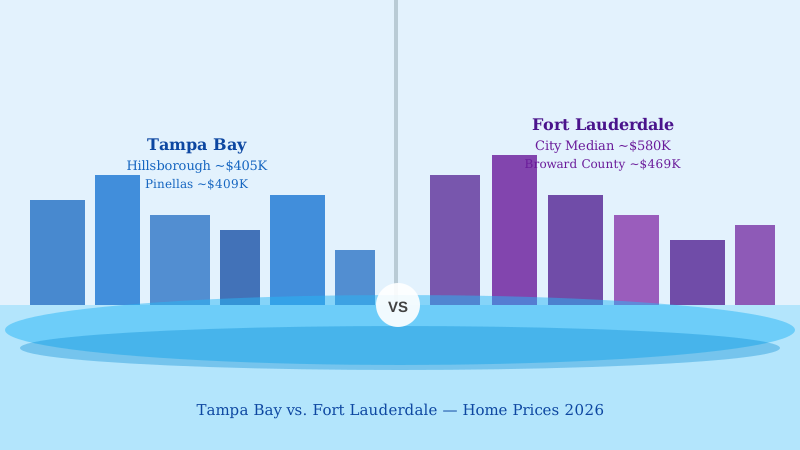
According to Redfin data, the median home sale price in Hillsborough County was approximately $405,000 in mid-2026, and the Pinellas County median came in near $409,000 over the same period. Together, Tampa Bay's core counties represent a market in the low-to-mid $400,000s.
Fort Lauderdale proper is significantly more expensive. The median sale price in Fort Lauderdale was approximately $580,000 in 2026 — roughly $170,000 above Hillsborough County's median, according to Redfin data. Broward County as a whole ran closer to $469,000 at the county-wide level, reflecting the broader mix of price points across suburban Broward communities.
What this means for sellers: Tampa Bay homes are accessible to a broader buyer pool — including first-time buyers and workforce professionals who have largely been priced out of Fort Lauderdale at $580,000 and above. More qualifying buyers typically translate to more offers and better contract retention rates.
Days on Market: How Fast Each Market Moves
Both markets slowed from their 2022 and 2023 peaks. In the Tampa Bay region, homes averaged approximately 73 to 89 days on market in mid-2026, depending on the specific county. In the Fort Lauderdale market, properties were averaging over 100 days, consistent with the broader South Florida slowdown driven by high insurance costs, condo reserve law impacts, and buyer resistance at elevated price points.
Tampa Bay sellers, on average, are seeing faster market movement than Fort Lauderdale counterparts — though neither market is moving quickly by historical standards. A Tampa Bay home priced correctly at or near the county median is moving in roughly 75 to 90 days; a Fort Lauderdale home at the city median can sit considerably longer before finding an accepted offer.
Need to Sell Your House Fast?
Get a free, no-obligation cash offer from Chitty Buys Houses. No repairs, no fees — close on your timeline.
Homeowners Insurance: A Shared Problem With Different Intensities
The homeowners insurance crisis affects all of Florida, but its impact varies by location. Fort Lauderdale and coastal Broward County properties face some of the highest annual premiums in the state — particularly in flood zones and along the coast. Annual policies of $6,000 to well over $10,000 are common in South Florida, and many private carriers have exited the Florida market, pushing sellers and buyers toward Citizens Property Insurance as a last resort.
Tampa Bay also faces elevated premiums — particularly in flood-prone areas of Pinellas County and coastal Manatee County — but inland Hillsborough, Pasco, and portions of Manatee County often carry lower annual premiums than comparable South Florida properties. This relative affordability gives some Tampa Bay sellers an advantage when buyers are calculating total monthly housing costs.
Condo Special Assessments: A Fort Lauderdale Headache Tampa Bay Shares
Florida's 2022 condominium safety legislation — enacted in response to the Surfside collapse — requires all Florida condominiums to complete structural integrity reserve studies and fully fund reserves. This requirement has generated large special assessments across the Fort Lauderdale condo market, where older oceanfront towers have levied significant assessments on individual unit owners. Tampa Bay condominiums face the same law, but the bulk of Tampa Bay's condo inventory consists of lower-rise, lower-cost buildings where reserve study findings are generally less severe — and corresponding assessments smaller.
Cash Buyer Scenarios: What Differs Between the Two Markets
Cash buyers are active in both Tampa Bay and Fort Lauderdale, but the typical situation differs. In Fort Lauderdale, cash buyers most commonly step in for condo special assessment situations, HOA-disputed properties, estate sales at elevated price points, and properties with complex insurance histories. In Tampa Bay, the most common cash sale scenarios involve aging roofs, code violations, inherited properties, financial hardship, and sellers who cannot afford to wait 75 to 90 days for a financed buyer in a buyer's market.
For Tampa Bay sellers who need to move quickly regardless of reason, Chitty Buys Houses provides written cash offers within 24 hours and closings in 7 to 21 days — no repairs, no agent commissions, and no financing contingencies that can collapse a deal at the last moment.
Ready to Sell Your Tampa Bay Home?
Call (888) 913-9906 or submit your property address online. We deliver a written, no-obligation cash offer within 24 hours and close on your schedule — 7 to 21 days, or up to 60 if you need more time to coordinate your move.
Frequently Asked Questions
Related Guides
Last updated:
Chitty Buys Houses is not a licensed real estate brokerage. We connect homeowners with cash buyers and licensed professionals.